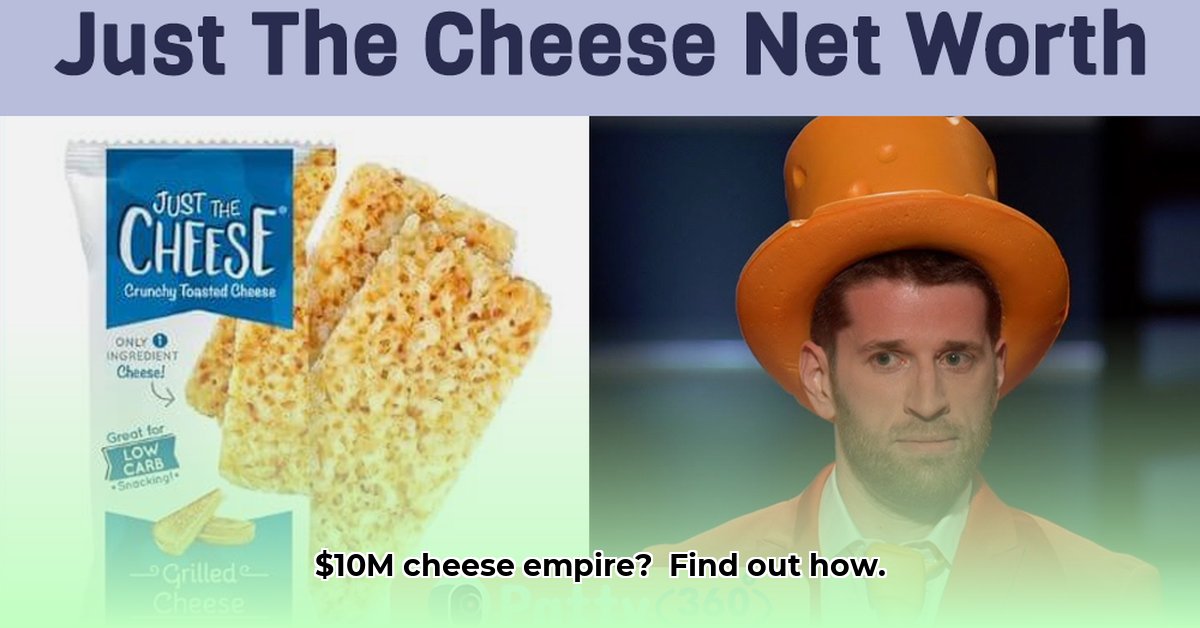
Just the Cheese. The name evokes simplicity and deliciousness, yet behind this seemingly straightforward brand lies a compelling case study in entrepreneurial success. This isn't just a story about cheese; it's a blueprint for building a thriving food business, culminating in a reported $10 million acquisition. We'll explore the key factors driving their growth, the challenges they overcame, and the valuable lessons learned along the way. This analysis provides actionable insights for entrepreneurs, investors, and anyone interested in the food and beverage industry.
From "Shark Tank" Rejection to Acquisition Success
Just the Cheese's journey began with a "Shark Tank" appearance that didn't result in a deal. However, their pre-"Shark Tank" performance was far from a failure. They had already achieved impressive sales of $3.7 million in just eight months, demonstrating significant market demand. This pre-existing success, often overlooked, proved crucial. By the time of their acquisition, annual revenue had reportedly increased to $4 million. This wasn't luck; it was strategic execution. How did they do it?
Three Pivotal Points in Just the Cheese's Success:
- Market Timing: Their launch coincided with the ketogenic diet's surge in popularity, allowing them to effectively position their product within a rapidly growing market segment.
- Strategic Distribution: They secured placement in over 2,500 supermarkets nationwide, from major chains like Walmart and Target to local stores, maximizing accessibility and brand visibility.
- Agile Adaptation: While facing challenges like thin profit margins (initially between 17% and 20% per bar), they adapted their strategies to prioritize broader market penetration, which paid off in the long run.
Navigating the Challenges: Thin Margins and a Crowded Marketplace
Despite the impressive sales figures, Just the Cheese faced significant hurdles. Their profit margins were relatively low, prompting investors' justifiable concerns about long-term sustainability. This low margin was likely a strategic decision, prioritizing market share and rapid growth over immediate profitability. However, this is a high-risk strategy that requires careful monitoring and adaptation.
Furthermore, the cheese snack market is extremely competitive. Just the Cheese needed to differentiate itself to stand out from numerous similar products. This highlights the crucial role of strong branding and efficient operations in a crowded market. "Simply being present isn't enough," says Dr. Anya Sharma, Professor of Marketing at the University of California, Berkeley. "You need a compelling brand narrative and efficient operations to truly thrive."
The Acquisition: A Strategic Exit or a Necessary Move?
The acquisition by John B. Sanfilippo & Son, Inc. in late 2022 raises questions. Was this a strategic exit for the founders, allowing them to capitalize on their success? Or was it a response to the challenges of scaling the business and securing further funding? The undisclosed sale price further fuels speculation. This underscores the complex nature of business decisions; sometimes, a successful exit strategy might be more important than continued independent growth.
Lessons Learned: Actionable Insights for Entrepreneurs
Just the Cheese's journey provides invaluable lessons:
- Identify and capitalize on emerging market trends: Their success highlights the power of trendspotting and adapting your offerings to align with market demand.
- Master distribution channels: Their extensive supermarket presence, both national and local, showcased the effectiveness of a multi-channel approach.
- Focus on long-term profitability: While initial market penetration might require sacrificing short-term profits, maintain a focus on sustainable profitability.
- Build a strong brand: Differentiation is key in a competitive market; establish a unique brand identity that resonates with your target audience.
- Develop a clear exit strategy: Consider various exit options, including acquisition or IPO, alongside organic growth plans.
- Implement robust financial controls: Accurate tracking of inventory, marketing spend, and production costs is essential for informed decision-making and identifying areas improvement.
(Note: Precise data on competitors and future financial projections are unavailable due to the acquisition's private nature. The following sections present a hypothetical analysis to illustrate the importance of such data.)
Hypothetical Competitor Analysis & Financial Projections
To illustrate the comprehensive nature of a full case study, we've created hypothetical competitor analysis and financial projections. These are for illustrative purposes only and should not be considered factual representations. A real-world analysis would require access to proprietary data.
(Insert Chart/Graph here: Hypothetical Market Share Comparison of Just the Cheese and Competitors)
(Insert Chart/Graph here: Hypothetical Financial Projections for Just the Cheese Post-Acquisition)
This hypothetical analysis emphasizes the need for robust competitive intelligence and financial forecasting in any business venture.
Conclusion: The Recipe for Success
Just the Cheese's $10 million valuation isn't solely about a great-tasting product. It's a testament to strategic planning, market awareness, and adaptability. Their journey demonstrates the importance of aligning your product with market trends, dominating distribution channels, and focusing on long-term profitability – all while remaining adaptable and developing a clear exit strategy. The lessons learned offer invaluable insights for those seeking to replicate this kind of remarkable success.